
A brief look over our shoulder may be helpful in beginning today’s post as we pick up where we left off last week with the story of Jesus and a tax collector in Luke 19:1-7.
In Part 1 of our current series, we had begun another mental excursion to Israel where we joined a large crowd following Jesus. He was making His way through Jericho as He headed back to Jerusalem for the last time. We discovered that a locally notorious tax collector had engaged in some radical behavior in an effort to get a closer look at the young Rabbi from Nazareth who was doing things no one else could do. Zacchaeus was a small guy, but there was nothing diminutive about his determination to see Jesus. The desire inside him was so compelling that he cast aside all concern for cultural restrictions, social decorum, and personal safety.
An Incredible Lesson Awaits ~
Today, as we return to that sycamore fig tree in Jericho, the Master Teacher’s going to demonstrate how the power of redemption can far exceed any benefit that the judgment and condemnation we so often want to see can produce. So to bring us back up to speed, let’s take another look at Luke’s account of the incident:
Then Jesus entered and passed through Jericho. Now behold, there was a man named Zacchaeus who was a chief tax collector, and he was rich. And he sought to see who Jesus was, but could not because of the crowd, for he was of short stature. So he ran ahead and climbed up into a sycamore tree to see Him, for He was going to pass that way. And when Jesus came to the place, He looked up and saw him, and said to him, “Zacchaeus, make haste and come down, for today I must stay at your house.” So he made haste and came down, and received Him joyfully. But when they saw it, they all complained, saying, “He has gone to be a guest with a man who is a sinner.” (Luke 19:1–7 NKJV)
In order to see the picture more clearly, let’s put on our Middle Eastern cultural lenses for just a minute because there’s more going on here than might appear to us on the surface. Our Western mindset can lead us to sort of blow past this transformative engagement between Jesus and Zacchaeus as it took place around the base of that fig tree, but the language of the text reveals that that was just the beginning.
Textual Discoveries Begin ~
The first, and most obvious, indicator that Jesus had more in mind than a casual shade tree conversation with Zacchaeus was His announcement that He would be going home with him.  After telling him to hurry up and get down, Jesus abruptly declared, “today I must stay at your house.” The Greek term, ménō , translated ‘stay’ indicates more than dropping in for some casual chit-chat over coffee and a muffin. Jesus’ desire was to have a serious, deeply personal exchange – one with eternal implications. His objective with Zacchaeus was no different from what He wants with all of us – to establish a personal relationship that can never be dissolved.
The text adds a couple of other indicators that the episode involved at least an ‘overnight’ stay. When we read that Zacchaeus received Him joyfully, the cultural understanding of the phrase is much more than just a friendly handshake under a tree. The Greek word, hupodéchomai, translated received in this case referred to the hospitality that was so important to Jews in that time. The term pictures a person opening his home to welcome an honored guest.
Stepping Over the Line ~
Finally, there was more underlying the grumbling response among His followers than a cultural faux pas. Any appearance of acceptance offered to Zacchaeus, a religiously unclean sinner, would have been bad enough, of course. But their use of the term, guest, reveals that Jesus went far beyond being friendly with a tax collector. The root of the Greek term, katalúō, translated guest, is associated with a room that, because of their deep commitment to hospitality, virtually every first century Jewish house had. It was the room that served as an accommodation for overnight visitors, or what we would call in our day, the “guest room”. Altogether, these terms make it pretty obvious that Jesus’ engagement with Zacchaeus was more than a brief conversation in the shade of a sycamore fig tree.
So, here’s how the text suggests that the story unfolded:
-
- Jesus followed Zacchaeus to his house and accepted the hospitality alluded to by the comment that He was received joyfully.
- We don’t know the details of the conversation between Zacchaeus and his honored guest, but personal contact with Jesus tends to shred superficial facades and unveil the real issues. Sin was the barrier standing between Zacchaeus and the life Jesus offered, not just his career choice. What God condemns are the sins we commit, regardless of the context surrounding them.
- As it has been with millions of us, contact with Jesus turned Zacchaeus’ value system upside down, or rather, turned it ‘right side up’. He saw that no wealth or power on earth could acquire what Jesus was able to give him, and nothing he could offer could begin to express his gratitude. Zacchaeus’ repentance unlocked the door to redemption, but it unlocked more than that. It opened the way for blessings the critical crowd would never have imagined.
Zacchaeus was hated not just because of his collaboration with the Romans, but because he was stealing from them, taking their hard-earned wages. In most cases, tax collectors were the only ones who knew the actual amounts required by Rome. That made extortion easy, and perpetrators of fraud among the tax collectors was commonplace.
For Many, It Was Personal ~
No doubt many of Zacchaeus’ victims were in the crowd following Jesus. We don’t know the extent of the losses they incurred or the pain they suffered, but their desire for judgment and condemnation would have been natural and understood. And who, they thought, would have more authority to deliver it than the righteous One they followed? When Jesus did the very opposite of what they expected, their disappointment would have been hard to suppress.
The well-deserved condemnation, judgment, and public shaming they expected Jesus to  deliver could have brought a sense of humiliation and regret to Zacchaeus, but the crowd would have received only ‘momentary’ satisfaction. Jesus had something far better in mind. He showed Zacchaeus what love was, and the redemption He offered melted his heart, transformed his values, taught him compassion – and that led to opening his checkbook! Here’s how Luke described it:
Then Zacchaeus stood and said to the Lord, “Look, Lord, I give half of my goods to the poor; and if I have taken anything from anyone by false accusation, I restore fourfold.” (Luke 19:8 NKJV)
The crowd may have grumbled about Jesus’ gracious approach to Zacchaeus, but no one grumbled about the result. When Jesus went home with him, things changed. Love eclipsed fear, righteousness overruled greed, compassion replaced selfish ambition, and his value system was totally transformed. The “tax rebates” that resulted from the impact of Zacchaeus’ redemption demonstrated a principle Paul would eventually declare to the Church in Rome.
…Where sin abounded, grace abounded much more, (Romans 5:20b NKJV)
A Decision to Make ~
As we leave Jericho and return to a culture where division is rampant and where opposing sides hurl judgment, condemnation, and rebuke at one another every minute of every day,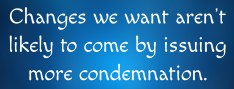 there are a couple more takeaways worth mentioning. Just as it was back in Jericho, the changes we want to see aren’t likely to come by issuing more condemnation. Jesus showed us once again that the power of grace and the impact of redemption can triumph over evil and will always be the key to the changes we really want.
There were two approaches demonstrated in our story, and they illustrate two options that we have before us:
-
- We can follow Jesus’ example and approach the sources of our grief with grace. The “rebates” that redemption can produce, like truth, righteousness, justice, and love form the strongest foundation possible for peace, freedom, social stability. And it will enable the most powerful economic engine that any people can ever hope to have.
- Or … We can follow our natural inclinations and pour out our righteous indignation while lies, corruption, division, and injustice continue to empower the kind of cabal that promotes violence, bankrupts economies, enslaves people, and destroys nations.
The power it takes to overcome the real source of our pain doesn’t come from turning up the volume on our complaints. The beginning place for miraculous transformation is personal time with Jesus. So, if you haven’t met Him on a personal level, He’d really like to come to your house so you can get to know Him better. A broken and hopeless world is waiting to see the kind of differences only genuine redemption can make.
“TWEETABLES” ~ Click to tweet and share from the pull quotes below. Each one links directly back to this article through Twitter . . .
-
- “Contact with Jesus turned Zacchaeus’ value system upside down, or rather, ‘right side up’. He saw that no wealth or power on earth could acquire what Jesus was able to give him, and nothing he could offer could begin to express his gratitude.” @GallaghersPen (Click here to Tweet)
- “The crowd would have received only ‘momentary satisfaction, but Jesus showed Zacchaeus what love was, and the redemption He offered melted his heart, transformed his values, taught him compassion – and that led to opening his checkbook!” @GallaghersPen (Click here to Tweet)
- “Love eclipsed fear, righteousness overruled greed, compassion replaced selfish ambition. The tax “rebates” that resulted from the impact of Zacchaeus’ redemption demonstrated a principle Paul would eventually declare to the Church in Rome.” @GallaghersPen (Click here to Tweet)
- “The rebates’ redemption can produce, like truth, righteousness, justice and love form the strongest foundation for peace and freedom and enable the most powerful economic engine and stable social structure that any people can ever hope to have.” @GallaghersPen (Click here to Tweet)
- “The power it takes to overcome the real source of our pain doesn’t come from turning up the volume on our complaints. The beginning place for miraculous transformation is personal time with Jesus.” @GallaghersPen (Click here to Tweet)


 Gallagher's Pen ~
I’ve seen so much of this current society in these lessons Mr. Ron. I especially see how we’ve become so judgmental and divided; it seems that “middle ground” doesn’t exist any more. Also see how Jesus turned the worlds of so many upside down by doing the opposite of what the cultural norms/customs dictated. We have the same opportunity today, don’t we sir? What a powerful lesson here my friend. Thank you!
LikeLike
So sorry to be slow getting a response to you, J.D. and I won’t so insensitive as to mention having too much to do for the past few days. With the load you carry every day, that would be almost insulting. Anyhow, you already know that seeing a note from you brightens our day and lifts our spirit.
We join you again in your assessment of the difficulty of trying to find anything remotely resembling middle ground these days. But then, that’s one of the primary objectives of the arch divider of men who seems to be running things in this country and his work toward that end isn’t going to change. The battle we fight is to not allow ourselves to be his pawns, and that’s impossible without the active participation of One stronger than both us and our enemy. Maintaining spiritual discernment in these times seems to be more vital to me than ever. The means of achieving that hasn’t changed, though. It is what it has always been–stay focused on the One who called us, trust Him, and do what He tells us to do. And speaking of which, Diane and I are praying about the book you feel compelled to write, and asking God to clear our whatever stands in the way of that. May faith in Jesus sustain you and may the strength that comes with it empower you, provide for you, and protect you as you continue to carry out the mission. Our hearts are always with you, your wonderful Mrs. Diane, and the Cross-Dubya family.
LikeLike
Yet another brilliant insight into the culture of Jesus’ time and the differences/similarities to our own, especially the natural, sinful inclinations of our all-too-sinful human hearts. It’s so hard to remember that God said to us, and says today, that vengeance is His alone. Our duty here is to love as Jesus loved (never easy!) and to show our corrupt culture that there is a better way through Him and the saving grace offered to us again and again.
Indeed, Ron, this is the everlasting tax relief offered to all who repent and believe. Blessings!
LikeLike
God bless you, Martha. You just made our bright sunny morning even brighter, as usual. The encouragement you wrap into your words, whether creating a publication of your own or responding to someone else’s, is more energizing and inspiring than you probably imagine. I’m so grateful for the digital possibilities we have, in spite of the devil’s influence in much of it. It afforded Diane and me with the opportunity to meet you and Danny and to be nourished by the gifts He granted you. So, thank you again, my long distance friend, and may the living Lord we serve make His presence unmistakable in all your weekend activities.
LikeLiked by 1 person