Today’s post is a continuation of The Meeting at the Well discussion we began last week, so let’s begin with a brief recap. Our story began with Jesus having decided to leave Judea and return to His “home turf” in Galilee. It was about noon on the second day of their approximate 90-mile trek when they arrived at Jacob’s well, which was near Sychar in the heart of Samaria. They had been traveling over some pretty rough terrain since probably six o’clock that morning, so the well provided a welcome opportunity for a rest stop. Jesus dispatched His companions to go into town to buy food, but being tired and thirsty and perhaps aware of events about to unfold, He decided to stay there at the well and wait for the disciples’ return. Little did anyone know that Jesus would decide to spend part of His lunch break totally obliterating cultural, religious, ethnic, gender, and racial barriers and demonstrating the kind of love and grace that would change the world.
Not a “Normal” Day ~
The drama began to unfold when an unnamed Samaritan woman approached the well to draw her daily supply of water, which in itself was unusual given the time of day. Even though drawing water was seen as “women’s work” in that culture, it was customarily done in the morning hours when it was cooler, and it was a communal activity, not something done alone at midday. But this woman’s failed relationships and social transgressions had reduced her to an object of public shame and expelled her from such communal activities with the other women. So, she was left to come to the well alone at a time when no one would normally be around. But she would soon learn that nothing about the rest of her day, and perhaps the rest of her life, would fit her definition of “normal” ever again.
As we pointed out earlier, encountering any man at the well would have felt awkward enough, but the fact that he appeared to be Jewish made it worse. Surprise turned to shock when this Jew didn’t hurriedly back away to protect himself from being contaminated by inadvertent contact with an “unclean,” half-breed Samaritan woman. But the shockwaves were just beginning.
The incredible linguistic simplicity of John’s report makes it easy for us Westerners to underestimate the implications of the stunning theological and cultural earthquake that Jesus set in motion. Here’s how he said it:
A woman of Samaria came to draw water. Jesus said to her, “Give Me a drink.” For His disciples had gone away into the city to buy food.
Then the woman of Samaria said to Him, “How is it that You, being a Jew, ask a drink from me, a Samaritan woman?” For Jews have no dealings with Samaritans. (John 4:7–9 NKJV)
Dazed and Confused ~
It’s surprising that the woman could speak at all, given Jesus’ unusual behavior, but He had made a request, and she couldn’t just ignore it. Her response in our day might sound  something like this: “I don’t understand what’s going on. Don’t you understand what it means to be Jewish around here? Don’t you know what people like me represent to people like you? Aren’t you aware that even if I was a man, no Jew would ever willingly obligate himself to a Samaritan by accepting a favor from him?”
But instead of resorting to approved protocols, Jesus injected an “if” proposal that, in one single sentence, would thrust the interaction deeper into uncharted territory than she could ever have imagined.
Jesus answered and said to her, “If you knew the gift of God, and who it is who says to you, ‘Give Me a drink,’ you would have asked Him, and He would have given you living water.” (John 4:10 NKJV)
Suspect at Best ~
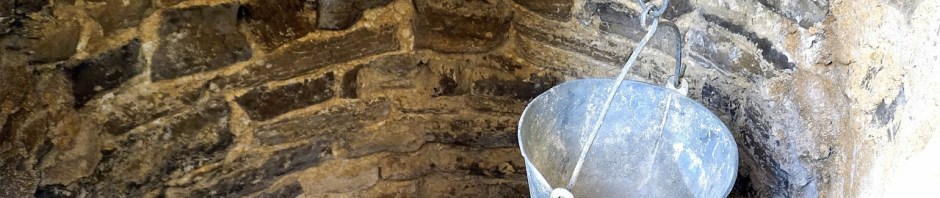
Since she knew nothing about any gift of God and since the One purporting to offer it was trashing every cultural norm she’d ever encountered, anything He offered would have been suspect at best. After all, a strange guy with no bucket and no rope was sitting on a well that was over 100 feet deep and offering to give her some kind of “living water,” after asking her to give him a drink. In light of that, it seems reasonable that her first reaction was to question the validity of the offer and His ability to provide it.
The woman said to Him, “Sir, You have nothing to draw with, and the well is deep. Where then do You get that living water? Are You greater than our father Jacob, who gave us the well, and drank from it himself, as well as his sons and his livestock?” (John 4:11–12 NKJV)
In responding to her challenge, Jesus made it clear that He was not talking about the well Jacob had dug hundreds of years earlier or the water she had come to draw:
Jesus answered and said to her, “Whoever drinks of this water will thirst again, but whoever drinks of the water that I shall give him will never thirst. But the water that I shall give him will become in him a fountain of water springing up into everlasting life.” (John 4:13–14 NKJV)
Changing Directions ~
As He was so prone to do, Jesus shifted gears without warning or explanation. He moved from the physical to the spiritual realm and the iconic well became more than a means of quenching a physical thirst. It became a metaphorical picture that illustrated a thirst that the substance in Jacob’s well could never satisfy, and that led to an offer of “water” that would sustain a life that goes on forever. That sudden change added one more item to the woman’s growing list of unexpected things and intensified her struggle to rationalize a situation that seemed so incredibly irrational.
Our 21st Century Western mindset may insulate us from feeling the mental, emotional, and spiritual tension involved in the drama playing out back then, but the lessons it revealed still come through, and they were meant for all who would hear her story – and that includes us. So, before continuing this spellbinding narrative next week, we should pause at this point to remind ourselves of a couple of key principles about redemption and deliverance that Jesus revealed in His presentation of the “if” that changed everything.
Optional and Conditional ~
First, Jesus’ offer of “living water” is both optional and conditional. He didn’t greet the woman at the well by saying, “Hi, there… I just thought I’d let you know that I’m depositing  some living water in your account and granting you eternal life. Have a nice rest of your day.” Instead, there was information to be processed; there were questions to be answered and decisions to be made. Jesus began the process of moving her from skepticism to faith by saying, “If you knew…” Then He identified the two things needed to move her toward a life changing decision:
-
- “If” she knew “Who” He really was and “what” He was offering, nothing would keep her from asking for it.
- “If” she asked (not performed a function, joined a group, or achieved a goal), nothing would keep Jesus from giving it.
And the “Living Water” He offered would ensure that she would never again feel that dry, aching thirst in her soul for real love, genuine hope, forgiveness, acceptance, peace, and freedom. Drinking from His “well” would give her a sense of satisfaction and fulfillment that all the world’s watering holes could never provide.
And for those thirsty souls contemplating their own “Jacob’s well” meeting with Jesus, it’s important to also notice what He didn’t offer:
-
- He didn’t offer to immediately change her circumstances.
- He didn’t offer to erase her past, pay her debts, and restore her status in the community.
- He didn’t offer to dig a well in her front yard, and install modern plumbing. He offered “Living” water and eternal security, not “running” water and an easier life.
The “gift of God” and the eternal life He offers is in Jesus, Himself. Salvation is in a “Who,” not in a “what.” Jesus said, “If you knew, you’d ask…” So, He’s still here, and now you know. The rest is up to you…
More to Come ~
As we look ahead now to next week, we’ll continue our excursion into Sychar and explore how Jesus dealt with the influence of race, religious differences, ethnicity, tradition, and cultural expectations.
“TWEETABLES” ~ Click to Tweet & Share from the pull quotes below. Each quote links directly to this article through Twitter.
-
-
- “Encountering any man at the well would have felt awkward enough, but the fact that he appeared to be Jewish made it worse.” @GallaghersPen (Click here to Tweet)
- “Instead of resorting to approved protocols, Jesus injected an “if” proposal to the woman at the well that, in one single sentence, would thrust the interaction deeper into uncharted territory than she could ever have imagined.” @GallaghersPen (Click here to Tweet)
- “As He was so prone to do, Jesus shifted gears without warning or explanation. He moved from the physical to the spiritual realm, and the iconic well became more than a means of quenching a physical thirst.” @GallaghersPen (Click here to Tweet)
- “The iconic well became a metaphorical picture that illustrated a thirst that the substance in Jacob’s well could never satisfy – and that led to an offer of “Living” water that would sustain a life that goes on forever.” @GallaghersPen (Click here to Tweet)
- “The ‘gift of God’ and the eternal life He offers is in Jesus, Himself. Salvation is in a “Who,” not in a “what.” Jesus said, “If you knew, you’d ask…” @GallaghersPen (Click here to Tweet)
-


 Gallagher's Pen ~
I couldn’t help but think of how many times I’ve seen folks shun those in church who may not look, sound, or dress like them. Is it out and out prejudice, fear, or discomfort because that person may be “outside of their comfort zone”? There’s outliers of course, situational awareness in this dangerous world tells us to “approach with caution”, even when God says “Approach.” Then again, there’s what I call “out and outliers” who will use whichever excuse makes them appear in the best light. How often we forget, “God sees the heart.” He knows our innermost thoughts, and when we avoid the “if” and fail to follow Christ’s example, then we miss the opportunity to share Christ in us and show that person what God’s love looks like.
Dealing with a personal tragedy here at the Cross-Dubya that really drove this message home today my friend. Oh, the blessings we’ve missed because we failed to heeds Christ’s work in our life. I wonder if it’s an indication that we have more work to let Him do.
Thank you and God’s blessings brother. Best to your best half, Ms. Diane and all of the Gallagher clan near and abroad. Remember to tell them you love them buddy.
LikeLike
First of all, our heart breaks with yours regarding whatever the nature of the tragedy is, and our prayers join yours and all those others being offered on your behalf. It’s amazing to me that you take the time to offer the insights you do at a time when other things are no doubt demanding your attention. But at the same time, I realize that God often chooses the tough spots to either reveal things we wouldn’t have realized in more pleasant circumstances, or to emphasize truths we’ve known but hadn’t see illustrated so graphically. Either way, I love the comments about our response to the “outliers” and especially the “out and outliers.” Granted, this dangerous world is growing more dangerous every day and we need to be vigilant, but mustn’t allow what we call vigilance to mask fear that will turn into spiritual paralysis.
Thank you again, Brother, for taking the time to send along the inspiration and encouragement that is your enduring trademark. Our love for you, your beloved Mrs. Diane, and everything about the Cross-Dubya continues, as do our prayers, of course.
LikeLike
“Salvation is a who, not a what.” How I love this line, Ron! And I truly love how you are making us dig deeper into this story that contains so much truth and grace. In welcoming this estranged woman into His sphere, Jesus turns everything about temporal culture on its head. He is the source of radical change and a new way of perceiving life. I’m looking forward to your next installment!
Blessings!
LikeLike
God bless you, dear Sister, and I wholeheartedly agree that Jesus turns everything about this increasingly hedonistic culture on its head. His approach for radical change wasn’t to foment riots in the streets and random violence. It was to actively and personally demonstrate the power of love, compassion, and forgiveness to breathe life and hope into lives that were broken and wasted by the spiritually vacuous and morally diseased promoted by the devil’s world system. Your comments always come infused with encouragement and inspiration, Martha. Our prayers continue for you and Danny and your beloved family.
LikeLike