How many times have we thought about some significant event in our lives that we’d give anything to be able to redo, edit, or delete entirely? And how many times have we prefaced our reflections on those events with the words, “If only …”? Does any of that sound familiar? “If only I hadn’t done that,” or “If only I hadn’t gone there,” or “If only I had kept my mouth shut,” or “If only I hadn’t applied for that credit card,” or “If only doing it once hadn’t seemed so harmless.” And the list could go on and on.
Another Possibility ~
But our if onlies don’t have to be relegated to the task of reinforcing heartache over prior decisions that led to painful results. They can also be used to consider the impact of decisions yet to be made. The phrase, If only I had… can be exchanged for If only I “would”…, and the difference can be transformational. John records one episode in Jesus’ life that illustrates what can happen when if relates to future possibilities rather than past failures.
But before delving into the story he records in the 4th chapter of the Gospel that bears his name, it’s important that we consider the context. Unfortunately, for most of us Western Christians, it’s easy to read the account and fail to grasp what a shocking violation against social, cultural, and religious boundaries was taking place at the time. Reading the words without considering the backdrop surrounding them is like looking at a picture of a brightly colored landscape done in grayscale. So, our purpose in this post is to explore the geographical and cultural stage on which the drama unfolds and how it looked in the world where it all took place.
Taking the Unexpected Route ~
Jesus and his disciples were making their way from the southern region of Israel near  Jerusalem back to His “home turf” in the northern region of Galilee. Most Jewish travelers making that journey would take a more circuitous route in order to avoid an encounter with Samaritans that could potentially “contaminate” them. But Jesus chose the more direct route along Israel’s central ridge that led through the heart of Samaria. John begins the story like this:
So He [Jesus] came to a city of Samaria which is called Sychar, near the plot of ground that Jacob gave to his son Joseph. Now Jacob’s well was there. Jesus therefore, being wearied from His journey, sat thus by the well. It was about the sixth hour. (John 4:5–6 NKJV)
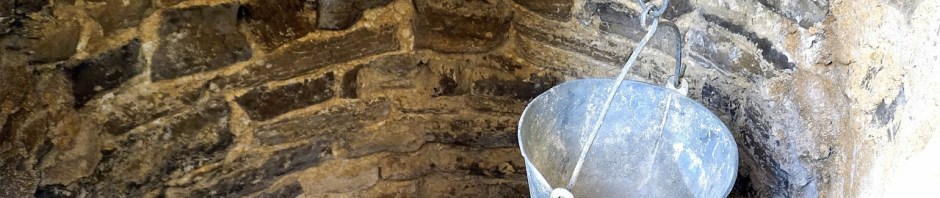
It was about noon and Jesus, and His entourage had been traveling on foot over rugged, hilly terrain for probably about six hours. Jesus was the Son of God, but He was as human as you and me, and He was tired and thirsty when they arrived at Sychar. When they got to Jacob’s well for their “rest stop”, Jesus took it literally. When John tells us that He “sat” by the well, it’s an accurate picture. Wells in that day were topped with large, circular stones. They had a smaller hole cut in the middle that would allow dropping a leather bucket into the well to draw water but prevent children and larger animals from falling in. Jesus was doubtlessly sitting on that stone ring.
When we Westerners hear someone blithely suggest that Jesus was “counter-cultural,” often the response is to sort of shrug our shoulders and think, “Oh well… that’s interesting, but no big deal.” But with apologies to our Catholic friends, let me suggest a scenario that might help bring it home to our day.
A Current “Counter-cultural” Comparison ~
What if the Pope decided to interrupt an official trip somewhere and reroute his plane to make a surprise visit to… oh, let’s say, Middle Tennessee, and had an irresistible urge to drop in on a praise and worship gathering at one of our joy-filled, Gospel-preaching, spiritually blessed, thriving local churches. Would that raise any eyebrows?
Then picture the Pope as he handed his gold walking stick to one of the friendly greeters, took off his pointy hat and all that external religious garb, and laid it all down on a bench in the lobby. Then imagine him smiling and swaying with the music as he swung his gold cross around, raised his hands upward, and joined in with the thousands who were singing and praising God.
Any chance a scene like that might make the news? Once again, you’re all very insightful geniuses, and, of course, you’re right. Nobody would ignore something like that, right? Anchors at the major networks and cable news shows would be hyperventilating. The mainstream media trolls would salivate over the breaking news that somehow Donald Trump had driven the Pontiff mad.
An Explosive Cultural Clash ~
I don’t mean to attack Catholicism, so please don’t send me hate mail. It’s just hard to convey exactly how shocking Jesus’ counter-cultural behavior was in this story. For instance, in that day, in order to avoid potential contamination, any Jewish male (and certainly a Rabbi) would normally have removed himself by at least 20 feet if a Samaritan, especially a female, was approaching. But Jesus not only didn’t back away in silence, He actually acknowledged her presence by speaking directly to her. For a notable Jewish Rabbi to have done such a thing would have been about as likely as having pork chops and yeast rolls for his Passover meal. Yet Jesus did more than just speak to her. He drew her into a conversation that turned her dead-end life around and turned her upside-down world right-side-up again. Here’s how John described it:
A woman of Samaria came to draw water. Jesus said to her, “Give Me a drink.” 8 For His disciples had gone away into the city to buy food.
Then the woman of Samaria said to Him, “How is it that You, being a Jew, ask a drink from me, a Samaritan woman?” For Jews have no dealings with Samaritans.
Jesus answered and said to her, “If you knew…” (John 4:7–10a NKJV)
How that woman must have felt when Jesus did that is beyond what most of us can manage to relate to. She was not just a Samaritan, she was one who had been totally shamed and rejected by the entire community. She couldn’t join with the other women who would go to the well early in the morning to share friendship and help one another as they drew the day’s water. She was left to go alone in the heat of the day. And as if she didn’t have enough problems, she finds herself confronted with this strange Jewish male sitting on the well, directly in her way, and defying every custom by not moving away like he should.
Boundaries Obliterated ~
Clearly, this Jew was different, and she was about to discover just how different He was. He would do something even more unthinkable than just speak to her. He would actually ask her for something. He would ask this woman, who was not only a despised Samaritan, but one who was condemned by her own people, to give Him something from her “unclean” hands. That was an explosive assault on every cultural boundary that existed at that point, and the implications would affect our understanding of the scope of God’s redemptive plan from then on.
From her perspective, to expect positive notice from anyone at all would have been an empty, painful fantasy. To think that a righteous, holy God would have compassion on a woman too contaminated for people to even talk to would have been beyond her wildest dreams. Yet in the person of His Son, God did much more than that. He loved her, rescued her life, and secured her future forever – and all of it was as real as the well Jesus was sitting on. She discovered that Jesus wasn’t in her way. He was her way!
More to Come ~
We’ll pick up here with Part 2 of this amazing story next week and continue to explore what it means for all of us. But meanwhile, we must remember that there are broken, thirsting people around us every day, and it’s our turn to take Jesus’ position on the well and be willing to challenge the norms if necessary. For those with no way back, no way out, and no way up, and Jesus isn’t in the way. He is the way …
“TWEETABLES” ~ Click to Tweet & Share from the pull quotes below. Each quote links directly to this article through Twitter.
-
-
- “To avoid potential contamination, any Jewish male, certainly a Rabbi, would normally remove himself by at least 20′ if a Samaritan, especially female, approached. Jesus didn’t back away in silence. He acknowledged her AND spoke directly to her.” @GallaghersPen (Click here to Tweet)
- “To think that a righteous, holy God would have compassion on a woman too contaminated for people to even talk to would have been beyond her wildest dreams. Yet in the person of His Son, God did much more than that.” @GallaghersPen (Click here to Tweet)
- “In the person of God’s Son, He loved the Samaritan woman, rescued her life, and secured her future forever – and all of it was as real as the well Jesus was sitting on. She discovered that Jesus wasn’t ‘in’ her way. He ‘was’ her way!” @GallaghersPen (Click here to Tweet)
- “There are broken, thirsting people around us every day, and it’s our turn to take Jesus’ position on the well and be willing to challenge the norms if necessary. For those with no way back, no way out, and no way up, Jesus isn’t in the way. He is the way.” @GallaghersPen (Click here to Tweet)
-


 Gallagher's Pen ~
Thoughts I hadn’t considered my friend. I’ve long thought of the word “if” as a “tense word”, meaning that it’s meaning is dependent upon its tense. As past tense, if often accompanies a lament. In present tense, it denotes the need for a decision and action (as opposed to what happens so often today, decision by indecision). In future tense, it offers hope. How I use my “ifs” is up to me, isn’t it? I can either lament the past or look forward to the future with hope. I can also use “if” to point others into their future. It’s far too easy to “Monday morning quarterback” another’s decisions or actions and tell them what they should have done (i.e. “if you would have only listened to me, that wouldn’t have happened”). Instead, we can encourage others to learn from their attempt and improve their outcome the next time (i.e. “If that situation arises again, you’ll be better prepared to address it.”).
As for the old “pork chops at a Kosher wedding” reference, you always bring a smile sir. I never considered though how that saying was counter-cultural. Love the way you use humor to share powerful spiritual insights.
God’s blessings, and once again I find myself offering meager apologies for my tardiness. Great stuff all the same. Even when I find it in the back of my mental fridge the next week.
LikeLike
I can’t believe you did this, J.D.–but then, on second thought, it’s so “you.” The gratitude I’m familiar with when I see your responses got kicked up several notches when I saw your name in my inbox. Knowing you were sidelined with some extra demands that couldn’t be ignored, I had no expectation that you’d take the time to read the post, much less react to it. If we ever get to have a face-to-face, I’m gonna remind you that constantly pushing yourself to the fringes isn’t always in your best interests. Those of us blessed to be in your tribe want you to be around a long, long time. If we miss seeing one of your encouraging exhibitions of God’s gifts once in a while, it’ll just heighten our anticipation of the next time.
Aside from that, thank you for the insights, which were so clearly dead on. The effects of “If” is no doubt determined by how and when we use it, and whether we respond to it in ways that Jesus taught, or choose to follow our own fallen nature and pile another layer on our mountain of regrets. So, God bless you again, my friend. You’ve reminded Diane and me how much we’ve grown to care about you and your sweet Diane. Our prayers continue, and our expectation for God’s gracious response remains stedfast. Please share our love with all those in the Cross-Dubya family.
LikeLike
You have such a way of relating, Ron. Living on the edge, breaking the pattern, pushing past usual boundaries – these were the ways of Jesus. A normal day turned into anything but for this woman. I am a bit surprised that every one of the disciples left Jesus on his own at the well. Perhaps the woman would not have approached had there been two men. On to next week’s read . . .
LikeLike
Sorry to be a bit tardy in responding, but thank you so much for taking the time to send along your encouraging comment, and as you pointed out, Jesus challenged cultural boundaries everywhere He went. But He obviously didn’t do it just to be an attention-seeking disrupter. He did it to demonstrate God’s heart for the most broken and rejected among us, and to provide a living exhibition of how redemption really works. God bless you for blessing our day by sharing your thoughts and for following Jesus’ example by speaking out–we need each other more than ever and it’s great to know you’re out there.
LikeLike
What a blessing to hear from you! It’s a welcome encouragement to know you’re out there, and you’re so right about your comment about it being anything but a normal day. The meeting has all the earmarks of being just a spontaneous, unplanned, coincidental incident, but even if it began as nothing more than that, Jesus certainly used it to unveil God’s heart and His plan of redemption in a way that would have implications that continue to this day. It’s pretty exciting to get to journey with Him, isn’t it? I feel sorry for those who think the Bible is just a boring collection of stories. In any case, thank you for blessing our day and letting us know you’re out there.
LikeLike
“Jesus isn’t in the way, He is the way.” How I love this truth, Ron, and I’m already looking forward to your next installment regarding the woman at the well! I appreciate your ability to place us back in the cultural setting of Jesus’ time so we understand even deeper and more fully what His actions meant then and what they mean now. So illuminating!
Thanks for your wise reflection today, my friend!
LikeLike
You just made my day, Martha. And as you said so well, seeing the events in the setting that they actually happened is so much richer and deeper than just picturing some guy sitting at a well having a conversation with s woman who happened to come along. Your encouragement is always such a welcome reminder that we’re not just a bunch of individuals that share a common interest. We’re a family. We’re knit together by a common Father and we live and work and fight and pray and celebrate and grieve and hope, and love together. So, thank you once again for reminding me of that special, indissoluble, and eternal relationship.
LikeLiked by 1 person